

You brush your teeth every morning and night. You try to floss when you remember. So, seeing blood in the sink can catch you off guard. Maybe you brushed too hard. Or perhaps your gums are just sensitive. It’s easy to brush it off, especially when nothing hurts.
But here’s the thing. Early signs of gum disease don’t always come with pain. Sometimes, it’s bleeding gums, bad breath that won’t go away, or a little swelling near your teeth. These changes might seem harmless at first. Still, knowing what to look for can help you understand when it’s time to see a dentist.
Spotting Blood While Brushing? Don’t Just Ignore It
An occasional bleeding may occur when you have been brushing your teeth rather harshly. But if your gums are bleeding repeatedly, this may signal some underlying issue.
Bleeding may be caused by plaque accumulation and irritation of the tissue. And in the end, gingivitis, the earliest stage of the gum disease, can be the consequence.
So, instead of changing your toothbrush and waiting for the bleeding to stop, it will be better if you consult with a dentist.
Are There Red or Sore Gums?
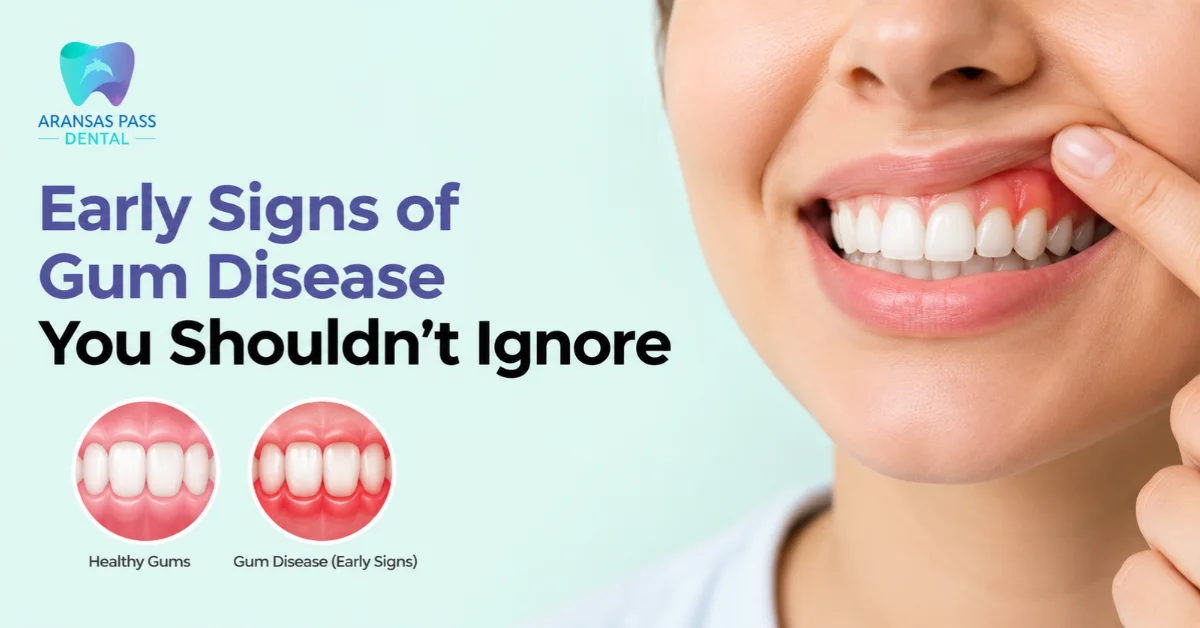
Your gums are supposed to be firm and healthy. And if they look swollen, red or sore, they are irritated by something.
You may experience soreness during meals and even the puffiness around your teeth. Strangely enough, gum inflammation may occur without much soreness.
And that is why you need to check your gums after brushing.
The Unpleasant Odor Keeps Appearing Again
Morning breath is one thing. And halitosis after eating certain products is another.
But what to do if you are regularly experiencing an unpleasant odor from your mouth despite brushing, mouthwashes, and other hygiene procedures?
Probably, plaque and bacteria surrounding your teeth cause this problem. And the bad taste is also a symptom of the issue.
But there are plenty of other reasons of bad breath. This is why you need to go to a dentist for a consultation.
More Tooth Surface Becomes Visible
Have you noticed that you see more of your teeth while smiling? Your gums may be retracting.
This process is called gum recession. It may make some areas of your teeth visible. Hot and cold products may cause a burning sensation for you.
Also, pay attention to your loose tooth and changes in your bite. All these signs should be checked by a dentist.
What You Can Do?
Start with the basics. Brush your teeth twice per day with a soft-bristled toothbrush and fluoride toothpaste. Also, remember about cleaning between your teeth every day.
If your gums continue bleeding or becoming sore, you should check them and discuss the possible causes.
Conclusion
The gums may signal about certain problems occurring without causing great pain. Such symptoms as bleeding, swelling, halitosis, and recession require a consultation with a dentist.
Contact Aransas Pass Dental to set up an appointment and to understand whether further examination or treatment is required.