

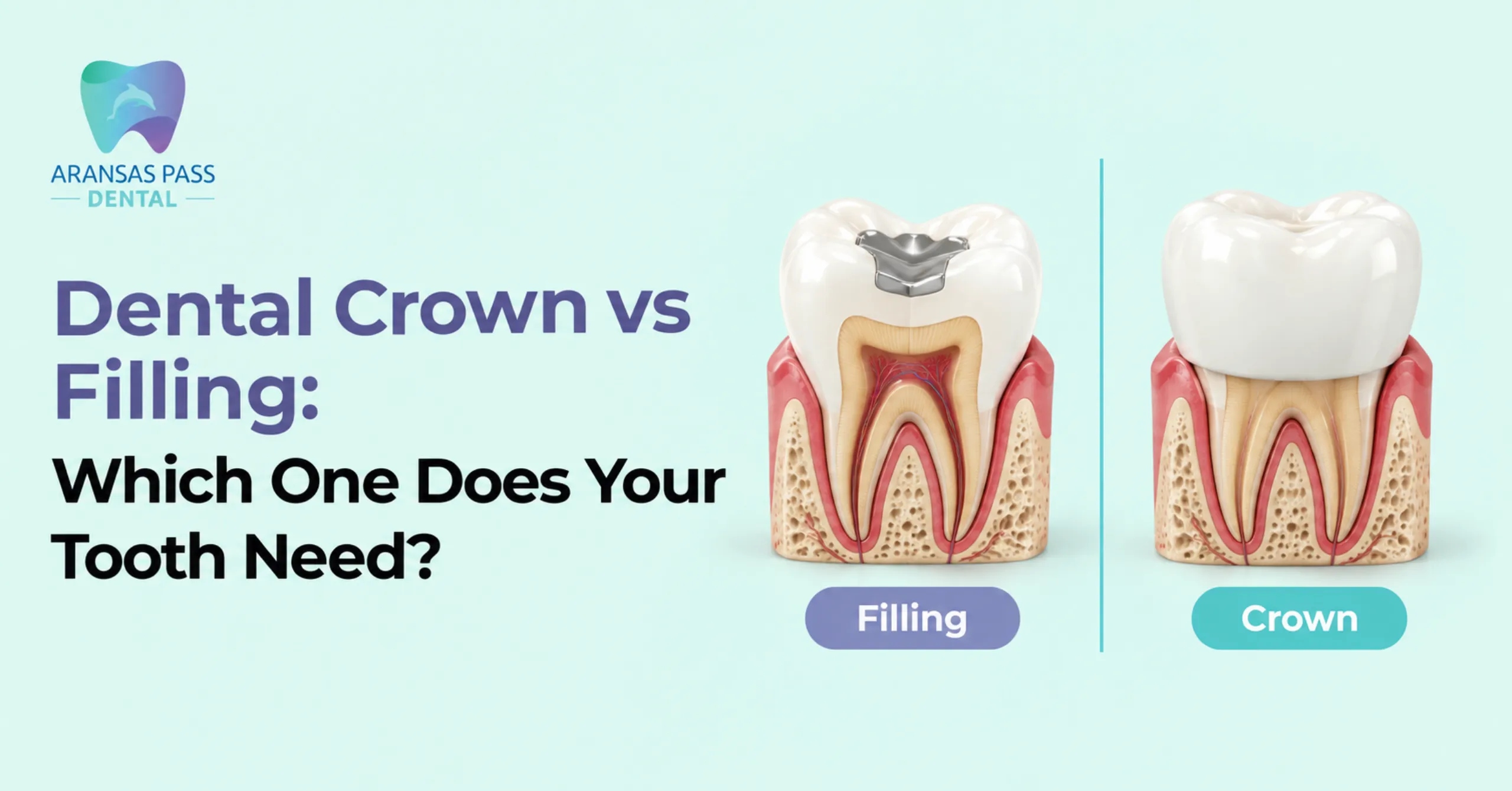
A damaged or decayed tooth does not always need the same treatment. Sometimes, a simple filling is enough to repair the problem. In some cases, it will be enough to fix the tooth by performing the treatment known as a filling. But sometimes, another solution is a dental crown. Even if you don’t have pain and wonder what to do, the decision depends on how much healthy tooth structure remains and how extensive the damage is.
If you have been looking for information on the differences between these two methods, then here is the short version, fillings are for repairing small damage, whereas dental crowns are meant for covering more of the tooth and making it stronger.
What Is a Filling?
A dental filling is a procedure that is performed in case of small or medium damage. Firstly, the damaged part is removed and then covered with some kind of material.
The advantage of this method is that more of your natural tooth structure is saved and it is usually a simpler procedure if there is enough strength left in the tooth.
What Is a Dental Crown?
The dental crown procedure is completely different from a filling, as it means placing a cover over the visible part of the tooth to protect and strengthen it.
A crown may be performed if the tooth has a large cavity, crack or loss of tooth structure. Also, it can be performed after some other procedures in case of additional protection of the tooth.
When Is a Filling the Better Choice?
If the tooth needs repair but not much structure is damaged, a filling might be sufficient.
So, if the tooth has a rather small cavity, it can be restored without the need for covering it fully. This way, it allows the dentist to save more of the tooth structure, but filling requires some amount of healthy structure for support.
Thus, bigger does not mean better when it comes to dental treatment. If the filling will restore your tooth correctly, there is no need to perform the crown procedure.
When Is a Crown the Better Choice?
A crown is chosen when the tooth needs more strength and protection for several reasons. For example, if there is extensive decay, a huge existing filling or loss of tooth structure.
Sometimes, the presence of cracks in the tooth changes the choice. A filling is able to repair a particular area of damage, but it is not able to cover the whole tooth. If there is a need for broader coverage because the remaining structure is too weak for a filling, then a crown is needed.
Crown vs. Filling: Main Differences
Have trouble distinguishing between these two procedures? Here is the short comparison.
| What to Compare | Dental Filling | Dental Crown |
| Main purpose | Repairing a damaged area | Protection and covering the tooth |
| Commonly considered for | Damage is small or moderate | More extensive damage |
| Tooth coverage | Covers only the repaired area | Covers the whole visible tooth |
| Preservation of the tooth | Usually preserves more of the tooth structure | Requires preparation for the placement of a crown |
| Support | Requires enough tooth around the filling | Provides protection to the weakened tooth |
How Does the Dentist Decide?
And this is why an exam is so important. The dentist looks at the size and location of the damage, the strength of the tooth and cracks, if any.
Also, an X-ray examination can show decay or damage that can be detected only through the X-ray. After that, the dentist is able to choose whether the filling will provide enough support or whether the tooth requires additional protection.
Conclusion
So, a filling and a crown can both restore your tooth, but they solve different tasks. For smaller damage, a filling may be sufficient. But in case of losing more strength or structure of the tooth, a crown may be needed.
If you are confused about what procedure will be appropriate for your tooth, then Aransas Pass Dental can examine your tooth and tell you about possible options for treatment.
Make an appointment with Aransas Pass Dental today!